qr Code Url

    Scan qrcode to view mobile website

    Data is empty
    0
    Member Center
    Exit
    Home /News /Industry News /Preventing rust inside steel pipe or tubing? /

    Preventing rust inside steel pipe or tubing?
    author: Cangtie
    2026-03-05
    {当前产品的产品关键词轮巡使用}
    Are you troubled by rusty pipes? Looking for corrosion-resistant pipes?
    1. introduction

    Cangtie Steel Pipe Company, a leading Anticorrosive steel pipe manufacturer, offers premium Anticorrosive steel pipes designed for long-term protection of metal surfaces in harsh, high-humidity environments. We effectively prevent rust and extend the service life of steel components using advanced corrosion protection systems, such as 3PE anti-corrosion coatings, FBE powder coatings, and external protective layers like Hot-dip galvanized (molten zinc).

    As a direct factory, our method efficiently forms a uniform protective layer on the substrate, making our Anticorrosive steel pipelines ideal for infrastructure, industrial, and piping applications. Whether used in construction, water supply systems, gas, or the energy industry, our Anticorrosive steel pipes deliver superior performance and durability under the most demanding conditions.

    2. Specification

    Outside Diameter: 20 mm –3600mm

    Wall Thickness: 1mm – 80mm

    Length: RL, FL, SRL, DRL

    Surface Treatments: Liquid Epoxy Resin Coating, Polymer Coating, Coal Tar Epoxy, 3PE, Vanish Coating, Bitumen Coating, Black Oil Coating. 

    Note: Custom surface treatments are available upon request.

    Standard Compliance: API 5L / ASTM A53-2007 / ASTM A106-2006 / BS1139 / BS1387

    3. Corrosion-resistant steel pipes are widely used in engineering fields such as petroleum, chemical, gas, heating, sewage treatment, water conservancy, bridges, and steel pipes. They can be divided into the following categories:

    3LPE Coated ERW Steel Pipe

    Three-layer polyethylene anti-corrosion coating is one of the main technical systems for anti-corrosion of buried pipelines both domestically and internationally. It possesses excellent corrosion resistance, low water absorption, and high mechanical strength, and has been widely used in buried water transmission, gas transmission, and pipeline transportation in recent years.
    **Specifications:**
    GB/T23257-2009 Technical Standard for Polyethylene Anti-corrosion Coating of Buried Steel Pipes
    SY/T0413-2002 Technical Standard for Polyethylene Anti-corrosion Coating of Buried Steel Pipes
    DIN30670-2012 German Technical Standard for Polyethylene Coating of Steel Pipes and Fittings
    CAN/CSA-Z245.21-M92 Canadian Technical Standard for Polyethylene Anti-corrosion Coating of Pipeline External Walls
    **Applications:**
    This product is widely used in oil pipelines, natural gas pipelines, heating pipelines, and water pipelines.
    3PP (Polypropylene) Coated ERW Steel Pipe
    DIN30678 standard technical specification for polypropylene coating for steel pipe and pipe fittings
    3PP Coating Advantages:
    3PP coated steel pipe refers to steel pipe with three layers of PP (polypropylene) coating on its surface. It boasts advantages such as high electrical strength, acid and alkali resistance, salt and alkali resistance, electrical insulation, long service life, heat resistance, and impact resistance. Furthermore, it utilizes advanced steel pipe coating technology, ensuring a strong bond between the coating and the pipe wall.

    3PP Coating Applications:

    3PP coated steel pipes possess advantages such as high electrical strength, acid resistance, alkali resistance, salt resistance, electrical insulation, long service life, heat resistance, and impact resistance, making them suitable for conveying high-temperature materials and other special materials.

    FBE Coated ERW Steel Pipe

    FBE-coated steel pipe is an externally coated hot-melt epoxy resin coated steel pipe, used for applying a hot-melt resin coating to the exterior of the steel pipe. The coating is applied as a dry powder to the heated surface of the steel pipe, with a thickness of 300-600 micrometers. After the FBE coating forms, the film is extremely hard and has excellent adhesion to the steel pipe surface. The FBE coating is uniform and has good chemical corrosion resistance.

    Advantage of the FBE coating pipe:

    (1) Easy to apply, pollution-free, and excellent high-temperature resistance (-40℃ to 85℃);
    (2) High strength and good bending resistance;
    (3) Strong adhesion, good integrity, and resistance to soil pressure and abrasion.
    FBE-coated steel pipes are typically buried in soil or underwater, with a temperature range of -40℃ to 85℃.
    The disadvantages of FBE-coated steel pipes are their relatively poor mechanical properties and moisture resistance.
    Our FBE coating conforms to standards such as SY/T0315, CAN/CSA Z245.20, AWWA C213, and Q/CNPC38.
    Applications: Widely used for corrosion protection of land and underwater pipelines.

    Polyurethane Insulation Coating ERW Steel Pipe

    Polyurethane direct-buried insulated pipes are high-performance, safe, reliable, and cost-effective direct-buried preheated insulated pipes. They possess advanced technology and practical performance unmatched by traditional trench and overhead pipe systems, and offer significant socio-economic benefits, making them a powerful measure for heating and energy conservation.
    They have a wide range of applications, effectively preventing the spread of fire and exhibiting excellent fire safety performance. Black-jacketed insulated pipes include spiral steel pipes, straight-seam steel pipes, and seamless steel pipes, with an outer layer of black polyethylene material, hence the name black-jacketed insulated pipes.

    4. Purpose of Coating Materials

    Applying a coating to the outer surface of steel pipes is crucial for preventing rust. Rust on the surface of steel pipes can severely affect their function, quality, and appearance. Therefore, the coating process has a significant impact on the overall quality of steel pipe products.

    5. Requirements for Coating Materials

    According to standards set by the American Petroleum Institute, steel pipes should provide at least three months of corrosion protection. However, there is a growing demand for longer rust protection periods, with many users requiring steel pipes to provide rust protection for 3 to 6 months under outdoor storage conditions. In addition to durability requirements, users also expect the coating to maintain a smooth surface, with even distribution of the corrosion inhibitor and no missed areas or drips that could affect the appearance.

    6. Types of coatings and their advantages and disadvantages

    a. Petroleum Asphalt Coating

    Petroleum asphalt coating is a traditional anti-corrosion layer consisting of a layer of petroleum asphalt reinforced with fiberglass cloth and covered with a protective polyvinyl chloride (PVC) film. It offers excellent waterproofing, good surface adhesion, and cost-effectiveness. However, it is sensitive to temperature changes, becoming brittle at low temperatures and prone to aging and cracking, especially in rocky or soil conditions. This necessitates additional protective measures, increasing costs.
    b. Coal tar epoxy coating

    Coal tar epoxy resin is made from epoxy resin and coal tar pitch, and possesses excellent water resistance, chemical resistance, corrosion resistance, good adhesion, mechanical strength, and insulation properties. However, it requires a long curing time after application, during which it is susceptible to adverse weather conditions, and the various components used in this coating system require special storage methods, thus increasing costs.

    c. Epoxy Powder Coating

    Epoxy powder coatings were introduced in the 1960s. The process involves electrostatically spraying powder onto pretreated and preheated pipe surfaces to form a dense, anti-corrosion layer. Advantages of epoxy powder coatings include: a wide operating temperature range (-60℃ to 100℃), strong adhesion, resistance to cathodic disbondment, impact resistance, good flexibility, and resistance to welding damage. Disadvantages include: a relatively thin coating, susceptibility to damage, and the need for complex production processes and equipment, posing challenges for field applications. Despite their excellent performance in many aspects, epoxy powder coatings still lag behind polyethylene coatings in terms of heat resistance and overall corrosion protection.

    d. Polyethylene Anti-corrosive Coating

    Polyethylene possesses excellent impact resistance and high hardness, and is suitable for a wide temperature range. Its superior flexibility and impact resistance, especially at low temperatures, make it widely used in pipe manufacturing in cold regions such as Russia and Western Europe. However, the application of polyethylene in large-diameter pipes still faces challenges, such as the potential for stress cracking and water infiltration leading to corrosion beneath the coating. Therefore, further research and improvement of materials and application technologies are needed.

    e. Heavy Anti-corrosion Coating

    Compared to standard coatings, heavy-duty anti-corrosion coatings offer significantly enhanced corrosion resistance. They maintain long-term effectiveness even under harsh conditions, with a service life of 10 to 15 years or more in chemical, marine, and solvent environments, and over 5 years in acidic, alkaline, or saline environments. These coatings typically have a dry film thickness between 200 μm and 2000 μm, ensuring superior protection and durability. They are widely used in marine structures, chemical equipment, storage tanks, and pipelines.

    7. Common Issues with Coating Materials

    Common issues with coatings include uneven application, dripping of anti-corrosive agents, and the formation of bubbles.

    (1) Uneven coating: Uneven distribution of anti-corrosive agents on the pipe surface results in areas with excessive coating thickness, leading to wastage, while thin or uncoated areas reduce the pipe's anti-corrosion capability.

    (2) Dripping of anti-corrosive agents: This phenomenon, where anti-corrosive agents solidify resembling droplets on the pipe surface, impacts the aesthetics while not directly affecting corrosion resistance.

    (3) Formation of bubbles: Air trapped within the anti-corrosive agent during application creates bubbles on the pipe's surface, affecting both appearance and coating effectiveness.

    8. How to Prevent Internal Corrosion in Steel Pipes?

    Internal Anti-Corrosion Coatings

    The inner wall of the pipe is coated with liquid epoxy resin or fusion-bonded epoxy powder (FBE). This smooth coating not only isolates corrosive media but also reduces friction and improves conveying efficiency.

    Cement Mortar Lining

    Commonly used for water supply pipelines. Cement mortar is applied via a centrifugal process to form a durable lining, creating an alkaline environment that passivates the steel surface to inhibit rust.

    Plastic Linings / Internal Liners

    Inserting a Polyethylene (PE) or Polypropylene (PP) pipe inside the steel pipe. This "pipe-in-pipe" technology is ideal for transporting highly corrosive chemical fluids or brine.

    Chemical Treatment / Corrosion Inhibitors

    Adding corrosion inhibitors to the transported fluid. These chemicals form a molecular-level protective film on the metal surface, neutralizing acidic substances and slowing down oxidative reactions.

    Ps: As a leading anticorrosive steel pipe manufacturer, Cangtie Steel Pipe Company can customize the most suitable internal corrosion protection solutions based on the customer's project environment.

    9. Project Details

    Whether performing repairs while lowering in a pipeline or in a coating plant, the Protal 7125 Repair Cartridge is the product of choice due to the fast cure time.

    On the REX pipeline project, the Protal 7125 (825ml) Repair Cartridge was chosen to repair holidays in the FBE coated pipe. The Protal 7125 is designed as a fast cure, low temperature pipeline coating, however when used to repair small areas (up to 36 sq. inches) on pipelines up to 150°F, it can achieve a full cure in less than 6 minutes. This fast cure time allows the construction crews to continue their work at a faster pace.

    The Protal 7125 exhibits excellent adhesion to FBE coatings as well as our Protal 7200 and other coatings. This along with the fast cure time gives us a major advantage over the other epoxy repair coatings on the market. On this project as well as many others the Protal 7125 has allowed the backfilling process to continue without any unnecessary delays.

    10. Logistics support

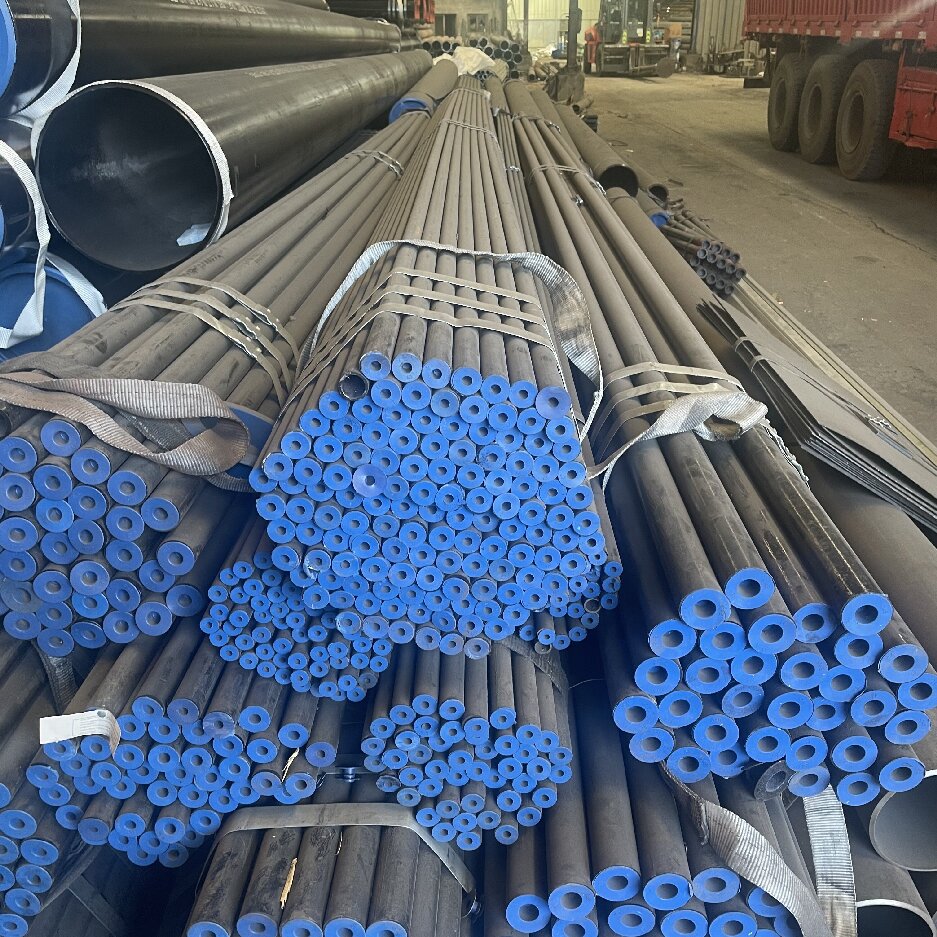
    As a professional anticorrosive steel pipe manufacturer, we recognize the critical importance of logistics to product quality. To prevent coating damage to our anticorrosive steel pipes during transit, we provide customized packaging solutions, including thickened pipe-end protectors and anti-collision fiber straps.Our anticorrosive steel pipes support global multimodal transport. Leveraging years of international project supply experience, we coordinate container or breakbulk shipping to ensure your anticorrosive pipeline orders arrive at the project site safely and on time.We provide full tracking services until the goods arrive at your project site.

    11. Payment methods

    For bulk anticorrosive steel pipe procurement orders, we offer flexible and secure payment options. Customers can settle payments for anticorrosive steel pipes via T/T, Irrevocable L/C, or Alibaba Trade Assurance to ensure transparent fund flow.To establish long-term partnerships, we provide customized credit terms and deposit ratios for high-quality anticorrosive steel pipe buyers based on order scale and credit ratings, supporting the smooth launch of your engineering projects.

    Key words: Anti-corrosion ERW Steel Pipe

    Share:

    Sustainable Practices in Steel Pipe Manufacturing

    Related Article
    image
    This article examines the environmental impact of steel pipe production, explores the industry's sustainability initiatives, and discusses the role of steel pipes in promoting green infrastructure projects.
    Sustainable Practices in Steel Pipe Manufacturing
    2026-01-21
    image
    Understanding corrosion, its causes, types, and the profound impact it can have on steel pipes is crucial for ensuring their longevity and reliable performance.
    Corrosion Resistance: The Key to Longevity in Steel Pipes
    2026-01-21
    image
    This article delves into the intricacies of various welding technologies employed in steel pipe production, including high - frequency welding and submerged arc welding, and underscores the significance of non - destructive testing in ensuring weld quality and safety.
    The Art of Welding: Ensuring the Integrity of Steel Pipes
    2026-01-21
    image
    This comprehensive guide delves deep into the heart of steel pipes, exploring their production processes, material science, economic considerations, and real-world applications.
    Unveiling the Core of Steel Pipes: From Production to Application
    2026-01-21

    About Us

    • Privacy Policy

    • Term of Service

    • Legal info

    • Knowledge Base

    Address


    Address: Yanshan Economic Development Zone, Yanshan County, Cangzhou City, Hebei Province

    Telephone:+86 190 6177 3869

    Email:hudson@cangtiepipe.com

    Products


    • Seamless Pipe

    • ERW / LSAW Pipe

    • Spiral Welded Pipe / SSAW Pipe


    SiteMap

    Copyright context all rights reserved.

    京公网安备 32058302002032号

    (494058)
    0