How to Choose the Right Steel Pipe for Your Project
1. Introduction: Why Pipe Selection Matters
Selecting the right steel pipe is one of the most important decisions in any industrial project. The correct choice affects not only cost efficiency but also long-term safety, durability, and compliance with engineering standards.
From seamless and welded pipes to ERW, LSAW, and SSAW types, every category has distinct advantages. This guide summarizes the essential considerations for choosing the right pipe according to application, pressure, material, and coating.
2. Understanding the Main Types of Steel Pipes
-
Seamless Pipes: Ideal for high-pressure systems and critical environments.
-
ERW Pipes: Economical, suitable for low-to-medium pressure pipelines.
-
LSAW Pipes: Used in long-distance oil, gas, and water transmission lines.
-
SSAW Pipes: Excellent for large-diameter, low-pressure structural uses.
Each type has specific standards—ASTM, API, EN, ISO—that define dimensions, tolerances, and test requirements.
3. Material Considerations: Carbon Steel vs Stainless Steel
-
Carbon Steel: High strength and cost-effective, but requires coating for corrosion resistance.
-
Stainless Steel: Excellent corrosion and temperature resistance, ideal for chemical or marine use.
Selecting the right grade (such as ASTM A106, A333, or A312) ensures reliability under given environmental conditions.
4. Coating, Lining, and Corrosion Protection
Surface protection significantly affects pipe lifespan. Common types include:
-
3PE/3PP Coating for underground and marine projects
-
FBE (Fusion Bonded Epoxy) for oil and gas pipelines
-
Galvanized or epoxy lining for general water systems
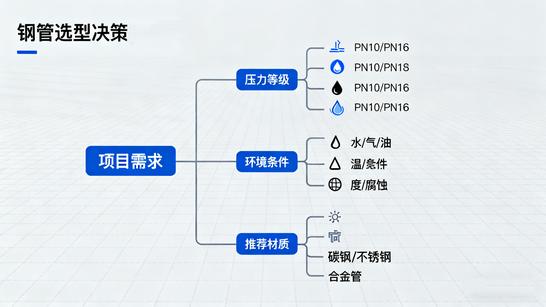
5. Pressure, Temperature, and Standard Compliance
Every pipe must meet the project’s pressure and temperature requirements.
Use standards such as ASME B31.3, API 5L, or EN 10216 to verify suitability.
Always request mill test certificates (MTC) and third-party inspection reports for quality assurance.
6. Matching Pipe Fittings and Flanges
Pipe systems are incomplete without matching flanges and fittings. Ensure:
-
Material and schedule compatibility
-
Correct pressure rating (ANSI Class, PN, etc.)
-
Proper welding or threaded joint selection
7. Conclusion: Integrate Selection with Application Goals
An optimized pipe system balances performance, cost, and compliance.
By understanding the differences between pipe types, materials, and coatings, project engineers can make informed decisions that ensure reliability and longevity.
For more insights, explore our industry guides on topics such as seamless vs welded pipes, standard comparison, coating technologies, and sustainable pipe solutions — each designed to deepen your understanding of industrial pipe selection.
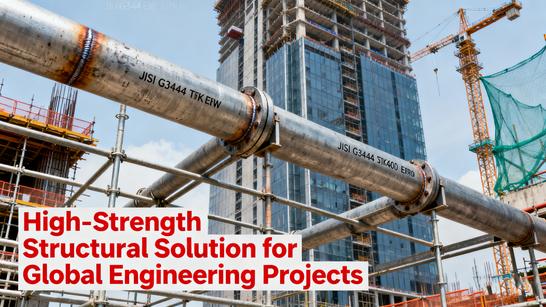
JIS G3444 STK400 ERW Steel Pipe: The High-Strength Structural Solution for Global Engineering Projects