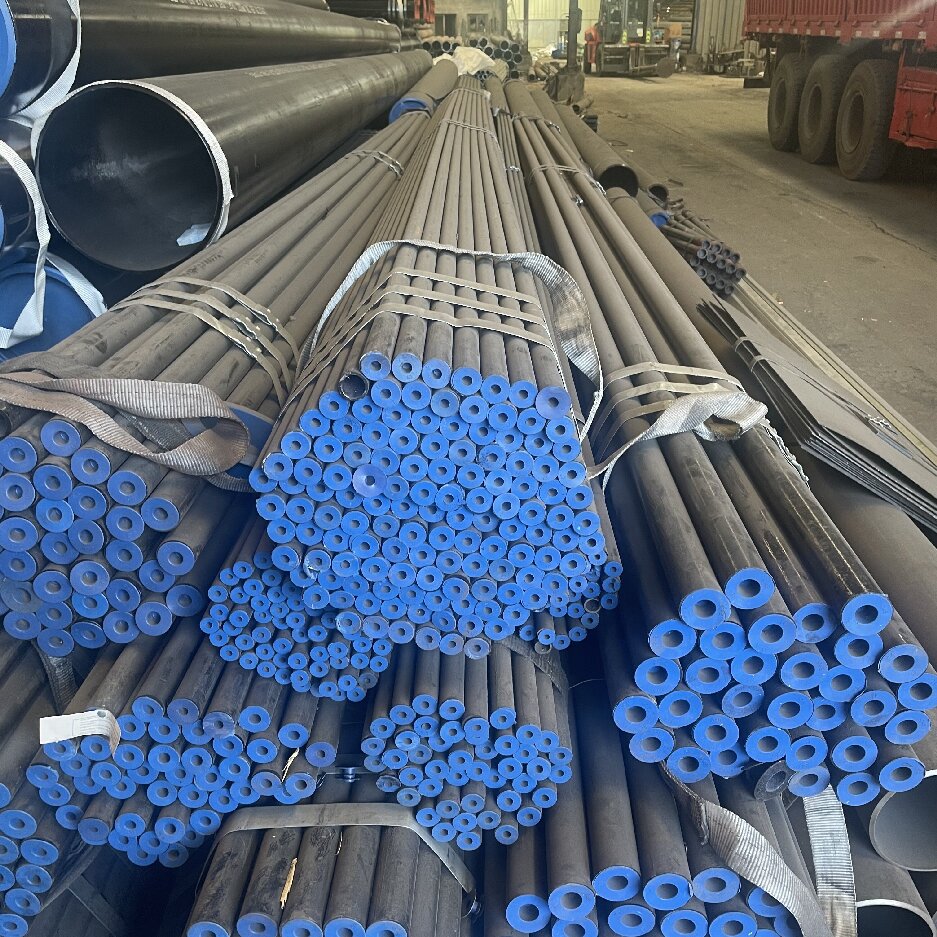
EN 10219 Rectangular Hollow Section – Structural & Industrial Applications

Introduction
In the vast and diverse realm of steel sections, rectangular hollow sections (RHS) have carved out a distinct niche for themselves, thanks to their unique shape and remarkable versatility. Our EN 10219 Rectangular Hollow Section is a premium-quality steel product that strictly adheres to the European standard for cold-formed welded structural hollow sections. This standard sets the benchmark for quality, ensuring that our product meets the highest industry requirements. In this article, we will delve deep into the features, benefits, and applications of our EN 10219 RHS, elucidating why it stands as the ideal choice for your structural and industrial projects.
1.Features of EN 10219 Rectangular Hollow Section
1.1 High Strength
Our EN 10219 RHS is crafted from high-quality steel, which endows it with exceptional tensile and yield strength. Tensile strength refers to the maximum amount of tensile stress that a material can withstand before breaking, while yield strength is the stress at which a material begins to deform plastically. In practical terms, this means that our RHS can bear significant loads and stresses without undergoing deformation or failure. For instance, in a large-scale construction project where the structural integrity of the building is of utmost importance, our EN 10219 RHS can provide the necessary support to withstand the weight of the building materials, as well as external forces such as strong winds or seismic activity.
1.2 Uniform Wall Thickness
The manufacturing process of our EN 10219 RHS involves cold-forming, which guarantees a uniform wall thickness throughout the entire length of the section. This consistency is of paramount importance for maintaining the structural integrity of the section. Uneven wall thickness can create weak points within the structure, which are susceptible to failure under stress. By ensuring a uniform wall thickness, our RHS offers reliable and consistent performance, giving you peace of mind that your structure will remain stable and secure over time.
1.3 Corrosion Resistance
Corrosion is a major concern in many industrial and outdoor environments, as it can significantly reduce the lifespan of steel structures. Our EN 10219 RHS can be galvanized or coated with other protective finishes to enhance its resistance to corrosion. Galvanization involves applying a layer of zinc to the surface of the steel, which acts as a sacrificial anode, preventing the steel from coming into direct contact with corrosive elements such as moisture, oxygen, and chemicals. In coastal areas where the air contains high levels of salt, or in chemical plants where there are various corrosive substances, our galvanized or coated RHS can withstand the harsh conditions and remain intact for an extended period.
1.4 Easy Fabrication
The rectangular shape of our EN 10219 RHS makes it incredibly easy to fabricate and assemble into a wide range of structural components. It can be cut to the desired length using various cutting tools, such as saws or plasma cutters. Drilling holes in the RHS is also a straightforward process, allowing for the attachment of other components using bolts or screws. Welding is another common method of joining RHS sections together, creating strong and durable connections. Additionally, the RHS can be bolted to other structural elements, providing flexibility in the design and construction process. This ease of fabrication enables contractors and engineers to quickly and efficiently create custom structures that meet the specific requirements of their projects.
2.Benefits of Using EN 10219 Rectangular Hollow Section
2.1 Structural Efficiency
The rectangular shape of our EN 10219 RHS offers high structural efficiency, enabling it to resist bending and torsion forces more effectively than many other shapes. Bending forces can cause a structure to deform or collapse, while torsion forces can twist and distort it. Our RHS's ability to withstand these forces makes it an ideal choice for use in frames, trusses, and other structural components. For example, in a bridge construction project, the RHS can be used to form the main support beams, ensuring that the bridge can safely carry the weight of vehicles and withstand the dynamic loads caused by traffic.
2.2 Aesthetic Appeal
In addition to its structural properties, our EN 10219 RHS also boasts a clean and uniform shape that gives it an aesthetic appeal. This makes it suitable for architectural and decorative applications. Architects and designers can use our RHS to create visually striking structures that enhance the overall appearance of a building or facility. For instance, in a modern office building, the RHS can be used to construct decorative screens or canopies that add a touch of elegance and sophistication to the exterior design.
2.3 Cost-Effectiveness
Compared to other structural materials, such as solid steel bars or I-beams, our EN 10219 RHS offers a more cost-effective solution. Its hollow design reduces the amount of material used in its construction, resulting in lower material costs. Additionally, the reduced weight of the RHS makes it easier and cheaper to transport and install. This can lead to significant savings in the overall project budget, especially for large-scale construction projects where the cost of materials and transportation can be substantial.
3.Applications of EN 10219 Rectangular Hollow Section
3.1 Building Frames
Our EN 10219 RHS is widely used in building frames, providing a strong and stable structure that can withstand the weight of the building and resist external forces such as wind and earthquakes. In high-rise buildings, the RHS can be used to form the columns and beams that support the floors and roof, ensuring the safety and stability of the entire structure. In residential buildings, the RHS can be used to construct the framework for walls and roofs, providing a durable and long-lasting solution.
3.2 Industrial Structures
In industrial facilities, our EN 10219 RHS is used to construct cranes, conveyors, and other heavy-duty equipment. Its high strength and durability make it suitable for these demanding applications. Cranes require strong and rigid support structures to lift and move heavy loads, and our RHS can provide the necessary strength and stability. Conveyors, which are used to transport materials within a factory or warehouse, also rely on the RHS for their framework, ensuring smooth and efficient operation.
(Back to Comprehensive Guide to ERW and Seamless Pipes: Performance, Manufacturing, and Applications)
BS 1387 Galvanized ERW Steel Pipe – Industrial & Structural Applications
Scaffolding ERW Steel Pipe – High-Strength & Uniform Wall Thickness
Related Article