The Scale Paradox: Engineering Challenges from Macro Pipes to Micro-Tolerance

Introduction
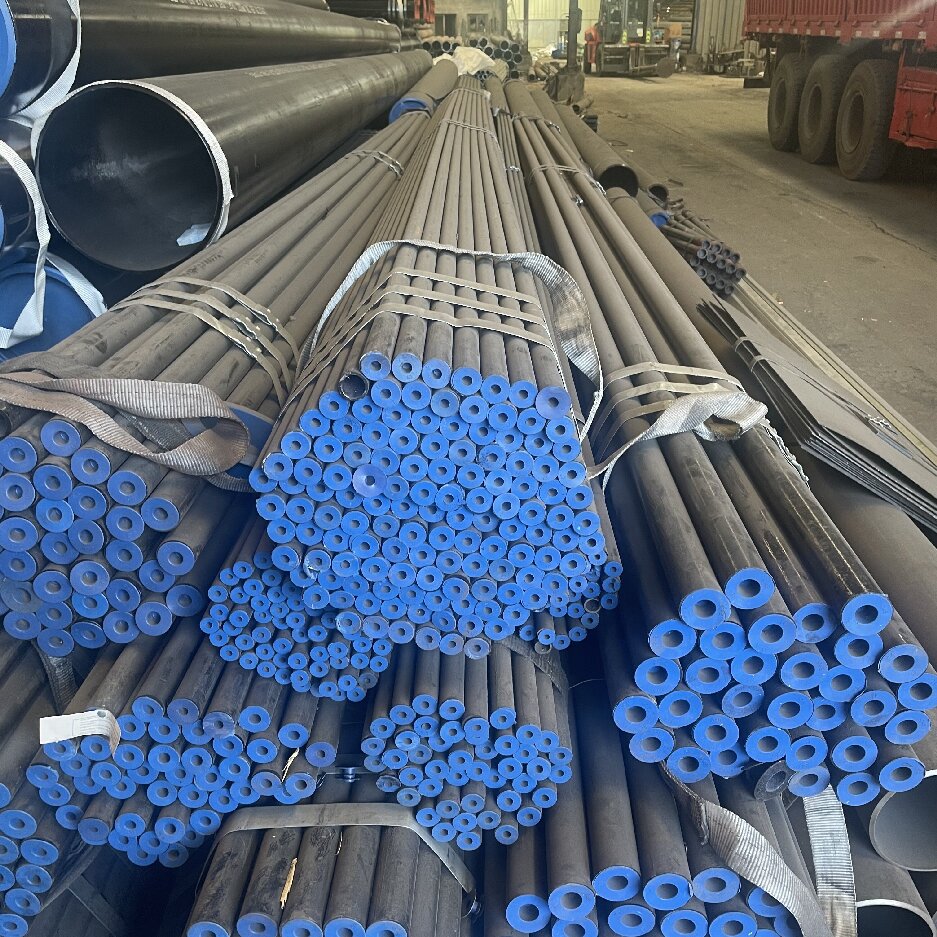
In the intricate world of engineering and manufacturing, seamless pipes stand as a testament to versatility and precision. These pipes navigate an engineering paradox, excelling at both extreme ends of the size spectrum—from massive, extra-large diameter pipes that form the backbone of heavy infrastructure to cold-drawn precision tubes that cater to the most exacting applications. This article delves into the multifaceted challenges and groundbreaking innovations involved in manufacturing seamless pipes at both macro and micro scales, highlighting their indispensable role across diverse industries.
1.Macro Challenges: Extra-Large Diameter Pipes
1.1 Fabrication Techniques for Massive Pipes
The production of extra-large diameter seamless pipes is a feat of engineering prowess, requiring specialized techniques and equipment. Unlike smaller pipes, which can be manufactured using more conventional methods, massive pipes demand innovative approaches to ensure structural integrity and uniformity. One such technique is the rotary piercing process, where a solid billet is heated and then pierced by a rotating mandrel to form a hollow shell. This shell is subsequently elongated and shaped into the desired pipe dimensions through a series of rolling and sizing operations.
Another method employed is the press forging process, which involves heating a billet and then applying immense pressure to shape it into a pipe. This process is particularly useful for producing pipes with thick walls and large diameters, as it allows for greater control over the final dimensions and material properties. However, both techniques present unique challenges, including maintaining consistent wall thickness, ensuring uniform material distribution, and minimizing defects such as cracks and inclusions.
1.2 Ensuring Consistent Wall Thickness and Material Properties
Achieving consistent wall thickness in extra-large diameter pipes is crucial for their structural integrity and performance. Variations in wall thickness can lead to stress concentrations, reducing the pipe's ability to withstand external loads and internal pressures. To mitigate this, manufacturers employ advanced monitoring and control systems during the fabrication process. These systems use sensors and real-time data analysis to continuously adjust the rolling and sizing parameters, ensuring that the wall thickness remains within specified tolerances.
Similarly, maintaining uniform material properties across the entire length and circumference of the pipe is essential. This involves carefully controlling the heating and cooling cycles during the manufacturing process to prevent the formation of undesirable microstructures or phases. Advanced heat treatment techniques, such as quenching and tempering, are often employed to enhance the pipe's mechanical properties, such as strength, toughness, and corrosion resistance.
1.3 Case Studies: Offshore Platforms and Bridge Piles
Extra-large diameter seamless pipes find extensive applications in offshore platforms and bridge piles, where their strength and durability are paramount. Offshore platforms, for instance, are subjected to harsh environmental conditions, including high waves, strong currents, and corrosive seawater. The pipes used in these structures must be able to withstand these forces without failing, ensuring the safety and stability of the platform.
Similarly, bridge piles, which support the weight of the bridge and transfer it to the underlying soil or rock, require pipes with exceptional load-bearing capacity. The use of extra-large diameter seamless pipes in bridge construction not only enhances the structural integrity of the bridge but also reduces the number of piles required, thereby lowering construction costs and minimizing environmental impact.
2.Micro Precision: Cold-Drawn Tubes
2.1 The Cold-Drawing Process and Its Benefits
At the opposite end of the size spectrum, cold-drawn precision tubes represent the pinnacle of micro-scale manufacturing. The cold-drawing process involves pulling a pre-formed tube through a die to reduce its diameter and wall thickness while improving its surface finish and dimensional accuracy. This process is carried out at room temperature, eliminating the need for subsequent heat treatment and reducing the risk of thermal-induced defects.
One of the primary benefits of cold-drawing is the ability to achieve tight tolerances and high dimensional accuracy. This is particularly important in applications where precise fit and alignment are critical, such as in automotive and hydraulic systems. Cold-drawn tubes also exhibit improved mechanical properties, including increased strength and hardness, due to work hardening during the drawing process.
2.2 Dimensional Accuracy and Tight Tolerances
Achieving dimensional accuracy and tight tolerances in cold-drawn tubes requires meticulous control over every aspect of the manufacturing process. This includes selecting the appropriate starting material, designing the die and mandrel to the exact specifications, and controlling the drawing speed and tension. Advanced measurement and inspection techniques, such as laser scanning and coordinate measuring machines, are used to verify the dimensions and tolerances of the finished tubes, ensuring they meet the stringent requirements of the application.
2.3 Applications: Automotive and Hydraulic Systems
Cold-drawn precision tubes find widespread use in the automotive industry, where they are employed in various components, such as fuel lines, brake lines, and hydraulic cylinders. The high dimensional accuracy and tight tolerances of these tubes ensure a secure fit and reliable performance, reducing the risk of leaks and failures. In hydraulic systems, cold-drawn tubes are used to transmit fluid power, where their strength and durability are essential for withstanding high pressures and cyclic loading.
Conclusion
The ability to manufacture seamless pipes at both ends of the size spectrum highlights the technology's versatility and the ingenuity of engineers and manufacturers. From extra-large diameter pipes that form the backbone of heavy infrastructure to cold-drawn precision tubes that cater to the most exacting applications, seamless pipes continue to push the boundaries of what's possible. Innovations in processes and materials, coupled with advanced monitoring and control systems, ensure that these pipes remain indispensable in diverse industries, contributing to the advancement of technology and the betterment of society. As we continue to explore new frontiers in engineering and manufacturing, seamless pipes will undoubtedly play a pivotal role in shaping the future.
[Back to The Invisible Backbone: How Seamless Pipe Innovation Shapes Modern Civilization]
The Silent Endurance: How Seamless Pipes Withstand the Tests of Time, Pressure, and Temperature
Beyond the Blueprint: The Philosophy of ‘Seamlessness’ in Material Engineering
Related Article