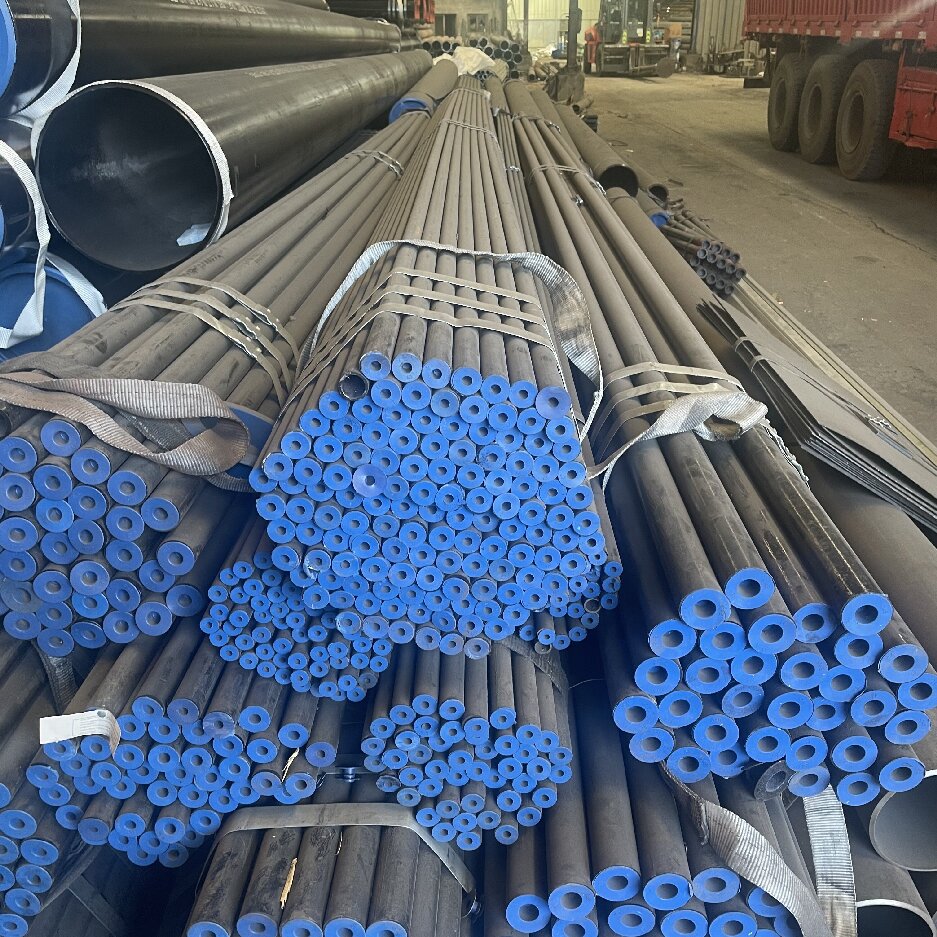
Choosing the Right Steel Pipe: A Guide to ERW, Seamless, and Spiral Options

Introduction
Selecting the appropriate type of steel pipe for a specific project is a decision that carries significant weight, impacting not only the performance and longevity of the system but also the overall cost-efficiency. With a myriad of options available in the market, understanding the distinct characteristics, advantages, and limitations of each type becomes paramount. This comprehensive guide delves into the intricacies of three popular steel pipe varieties: Electric Resistance Welded (ERW), seamless, and spiral pipes. By comparing and contrasting these options, we aim to equip readers with the knowledge necessary to make informed decisions tailored to their unique needs.
1.ERW Pipes: Cost-Effective and Versatile
1.1 Applications
ERW pipes have carved out a niche for themselves in a wide array of applications, thanks to their cost-effectiveness and versatility. They are extensively utilized in water supply systems, where their ability to maintain uniform flow rates and resist corrosion makes them an ideal choice. In gas transmission, ERW pipes offer a reliable means of transporting natural gas and other flammable substances safely and efficiently. Additionally, their structural integrity and ease of installation have made them a staple in construction projects, ranging from residential buildings to large-scale infrastructure developments.
1.2 Advantages
One of the primary advantages of ERW pipes lies in their uniform wall thickness, which ensures consistent performance across the entire length of the pipe. This uniformity is crucial in applications where precise flow control is necessary, such as in irrigation systems or chemical processing plants. Furthermore, ERW pipes boast smooth surfaces, reducing friction and minimizing energy loss during fluid transmission. Another significant benefit is their scalability; ERW pipes can be produced in large quantities, making them readily available and cost-effective for projects of varying scales.
1.3 Limitations
Despite their numerous advantages, ERW pipes do have limitations that must be considered. One notable drawback is their suitability for high-pressure applications. While they can withstand moderate pressures, the presence of a welded seam makes them less robust compared to seamless pipes, which are specifically designed to handle extreme pressure conditions. Therefore, in scenarios where high-pressure resistance is a non-negotiable requirement, seamless pipes may be the preferred option.
2.Seamless Pipes: Strong and Durable
2.1 Applications
Seamless pipes are the go-to choice for high-pressure and high-temperature applications, where strength and durability are of the utmost importance. In the oil and gas exploration industry, seamless pipes are used to transport crude oil and natural gas from deep within the earth to the surface, withstanding the immense pressures and temperatures encountered during extraction. Similarly, in power generation plants, seamless pipes play a critical role in conveying steam and other high-temperature fluids, ensuring the efficient operation of turbines and other machinery.
2.2 Advantages
The superior strength and durability of seamless pipes stem from their seamless construction. Unlike ERW pipes, which have a welded seam, seamless pipes are formed from a single piece of steel, eliminating any weak points that could compromise their integrity. This seamless design also enhances their pressure resistance, allowing them to withstand higher internal pressures without failing. Additionally, seamless pipes exhibit excellent corrosion resistance, particularly when made from high-quality stainless steel or coated with protective layers, making them suitable for use in harsh environments.
2.3 Limitations
While seamless pipes offer numerous benefits, they are not without their limitations. One significant drawback is their cost; seamless pipes are generally more expensive than ERW pipes due to the complex manufacturing process involved. This higher cost can be a deterrent for projects with tight budget constraints. Another limitation is the difficulty in producing seamless pipes in large diameters. The manufacturing process for seamless pipes becomes increasingly challenging and costly as the diameter increases, making them less practical for applications requiring very large pipes.
3.Spiral Pipes: Large-Diameter Solutions
3.1 Applications
Spiral pipes, also known as spiral welded pipes, are commonly employed in large-diameter applications where their unique characteristics shine. In water pipelines, spiral pipes are used to transport large volumes of water over long distances, thanks to their ability to maintain high flow rates with minimal pressure loss. Similarly, in sewage systems, spiral pipes provide a reliable means of conveying wastewater, withstanding the corrosive nature of the fluids and the external pressures exerted by the surrounding soil. Additionally, spiral pipes are used as structural supports in construction projects, where their high strength and durability are essential for ensuring the stability and safety of the structure.
3.2 Advantages
One of the primary advantages of spiral pipes is their ability to be produced in large diameters with high strength and durability. The spiral welding process allows for the creation of pipes with diameters that would be impractical or impossible to achieve with seamless pipes. This makes spiral pipes an ideal choice for applications requiring very large pipes, such as water pipelines and sewage systems. Furthermore, spiral pipes offer excellent resistance to external pressures, making them suitable for use in underground applications where the pipe is subjected to significant soil loads.
3.3 Limitations
Despite their numerous advantages, spiral pipes do have limitations that must be taken into account. One notable drawback is their slightly lower pressure resistance compared to seamless pipes. While spiral pipes can withstand moderate to high pressures, they may not be suitable for applications where extreme pressure conditions are encountered. Additionally, spiral pipes may require more maintenance over time compared to seamless pipes, particularly in environments where corrosion is a concern. Regular inspections and protective coatings may be necessary to ensure the longevity and performance of spiral pipes.
Conclusion
Choosing the right steel pipe for a project is a decision that requires careful consideration of various factors, including application requirements, budget constraints, and desired performance characteristics. By understanding the differences between ERW, seamless, and spiral pipes, businesses can make informed decisions that ensure the optimal performance and cost-efficiency of their projects. Whether it's the cost-effectiveness and versatility of ERW pipes, the strength and durability of seamless pipes, or the large-diameter solutions offered by spiral pipes, there is a steel pipe option available to meet every need.[Back to Comprehensive Guide to Spiral and ERW Steel Pipes in China: Production, Standards, and Applications]
Spotlight on Our Premium Steel Pipe Products: Features and Benefits
ERW Pipe Technology: A Deep Dive into Its Mechanics and Benefits
Related Article