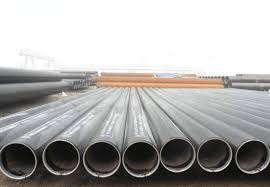
Sonic Logging Pipe: Revolutionizing Tunnel Quality Assessment

Introduction
In the realm of tunnel construction, ensuring the structural integrity and quality of the tunnel lining and supporting piles is of paramount importance. Any defects or anomalies within these structures can pose significant safety risks and lead to costly repairs or even catastrophic failures. Sonic logging pipes have emerged as a groundbreaking technology that has transformed the way tunnel quality is assessed, providing non-destructive testing capabilities that detect defects with unprecedented accuracy. This article delves into the intricate technology behind sonic logging pipes and explores their profound impact on tunnel construction quality control.
Section 1: The Science Behind Sonic Logging
1.1 Principle of Operation
Sonic logging pipes operate on a fundamental principle that leverages the behavior of sound waves when they encounter different materials and structures. The process begins with the transmission of sound waves through the pile body. These sound waves are typically generated by a transducer located at one end of the sonic logging pipe. As the sound waves propagate through the pile, they interact with the surrounding concrete or other materials.
When the sound waves encounter an anomaly such as a void, crack, or inclusion within the pile, their behavior changes. Some of the waves are reflected back towards the source, while others may be scattered or absorbed. By carefully analyzing these reflected waves, engineers can gain valuable insights into the internal structure of the pile. The time it takes for the reflected waves to return, known as the travel time, provides information about the distance of the defect from the transducer. The amplitude and frequency of the reflected waves, on the other hand, offer clues about the size, shape, and nature of the defect.
For example, a large void within the pile will cause a significant reflection of sound waves, resulting in a high-amplitude signal with a relatively long travel time. In contrast, a small crack may produce a weaker reflection with a shorter travel time. By comparing the characteristics of the reflected waves with known standards and models, engineers can accurately identify and classify the defects present within the pile.
1.2 Advanced Signal Processing
Modern sonic logging systems are equipped with sophisticated signal processing algorithms that play a crucial role in enhancing the interpretation of the collected data. These algorithms are designed to filter out noise and extract meaningful information from the complex waveforms generated by the sound waves.
One of the key techniques used in signal processing is the wavelet transform. Unlike traditional Fourier transforms, which provide information about the frequency content of a signal over the entire time domain, wavelet transforms offer a time-frequency representation of the signal. This allows engineers to analyze the signal at different scales, making it easier to detect and isolate defects that may have varying characteristics in both time and frequency.
Neural networks are another powerful tool employed in sonic logging signal processing. These artificial intelligence algorithms can be trained on large datasets of known defect signatures to recognize and classify defects automatically. By feeding the raw sonic logging data into a neural network, engineers can obtain quick and accurate assessments of the pile's condition, reducing the need for manual interpretation and minimizing the risk of human error.
In addition to wavelet transforms and neural networks, other signal processing techniques such as filtering, deconvolution, and pattern recognition are also commonly used in sonic logging systems. These techniques work in tandem to improve the defect detection accuracy and provide engineers with a comprehensive understanding of the pile's internal structure.
Section 2: Practical Applications and Benefits
2.1 Real-Time Monitoring
One of the most significant advantages of integrating sonic logging pipes into the tunnel construction process is the ability to perform real-time monitoring of pile integrity. Traditional testing methods often require the construction process to be halted while samples are taken and analyzed, leading to delays and disruptions. With sonic logging pipes, however, engineers can continuously monitor the piles as they are being installed, providing immediate feedback on their quality.
This real-time feedback loop allows for quick corrective actions to be taken if any defects are detected. For example, if a void is identified within a pile during the installation process, the construction team can immediately adjust the concrete mix or take other measures to fill the void, ensuring that the pile meets the required quality standards. This not only reduces the need for rework but also helps to ensure that project timelines are met, saving time and money for the construction company.
Real-time monitoring also enables engineers to detect and address potential problems before they escalate into more serious issues. By continuously monitoring the piles, engineers can identify trends or patterns in the data that may indicate the presence of a larger structural problem. This early warning system allows for proactive maintenance and repair, preventing costly failures and ensuring the long-term safety and stability of the tunnel.
2.2 Cost-Effectiveness
Compared to traditional testing methods, sonic logging offers a highly cost-effective solution for large-scale tunnel projects. Traditional methods such as excavation or core sampling are not only time-consuming but also require significant resources and labor. Excavating large sections of the tunnel to inspect the piles can be extremely disruptive to the construction process and may even require the temporary closure of the tunnel. Core sampling, on the other hand, involves taking physical samples of the concrete from the piles, which can be destructive and may not provide a comprehensive view of the pile's internal structure.
Sonic logging pipes, on the other hand, are non-destructive and can be installed quickly and easily during the pile installation process. They do not require any excavation or core sampling, saving time and resources. Additionally, the data collected by sonic logging pipes can be analyzed quickly and accurately using advanced signal processing algorithms, reducing the need for manual interpretation and minimizing the risk of errors. This efficiency translates into significant cost savings for construction companies, making sonic logging an attractive option for large-scale tunnel projects.
2.3 Enhanced Safety
Safety is a top priority in tunnel construction, and sonic logging pipes play a crucial role in ensuring the safety of workers and the public. By providing accurate and detailed information about the internal structure of the piles, sonic logging helps to identify potential safety hazards before they become a problem. For example, if a pile is found to have significant defects or is not properly installed, it can be reinforced or replaced before the tunnel is put into use, preventing collapses or other accidents.
Sonic logging also helps to ensure the long-term stability of the tunnel by detecting and addressing any issues that may affect the pile's load-bearing capacity. By monitoring the piles over time, engineers can identify any signs of deterioration or damage and take appropriate action to maintain the structural integrity of the tunnel. This proactive approach to safety helps to protect workers during the construction process and ensures the safety of the public once the tunnel is in operation.
Conclusion
Sonic logging pipes have revolutionized tunnel quality assessment, providing a fast, accurate, and cost-effective means of detecting defects within tunnel piles. The science behind sonic logging, with its advanced signal processing techniques, enables engineers to gain a comprehensive understanding of the pile's internal structure. The practical applications and benefits of sonic logging, including real-time monitoring, cost-effectiveness, and enhanced safety, make it an indispensable tool in tunnel construction quality control. As technology continues to advance, the applications of sonic logging pipes in tunnel construction are set to expand further, further enhancing the safety and efficiency of tunnel projects around the world.
[Back to Advanced Techniques in Sonic Logging and Grouting Pipe Systems for Modern Tunnel Construction]
Beyond the Basics: Pioneering Challenges in Stainless Steel & Galvanized Pipe Engineering
Tunnel Roof Support Pipes: A Critical Component in Underground Safety
Related Article