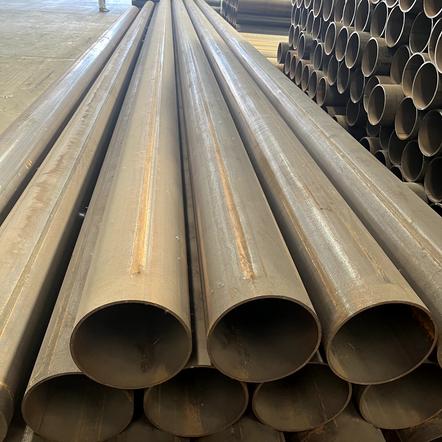
Applications of Seamless Steel Pipes: Uses, Advantages, and Limitations
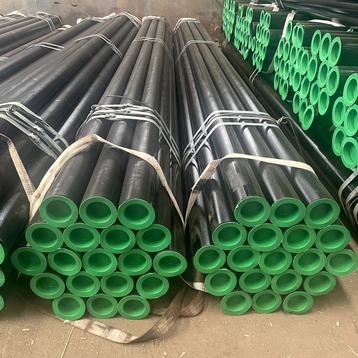
1. Overview
Seamless steel pipes are manufactured through a process of hot rolling, cold drawing, or cold rolling, without any welding seam. Because of their uniform structure and superior strength, they are widely used in industries that require high pressure, high temperature, or complex mechanical performance.
2. Major Applications
(1) Oil and Gas Industry
Seamless pipes are the backbone of the oil and gas transportation system.
They are used in:
-
Oil well casing and tubing
-
High-pressure pipelines for crude oil and natural gas
-
Offshore drilling and subsea pipelines
Why: Seamless pipes can withstand high internal pressure and resist cracking under fluctuating load conditions.
Benefit: Excellent mechanical strength, corrosion resistance (when coated), and ability to operate under extreme temperature and pressure.
(2) Power Generation and Boilers
In thermal power plants, seamless steel pipes are used to convey steam, superheated steam, and feedwater.
Typical uses: Boiler tubes, superheater tubes, heat exchangers.
Why: They can handle temperatures up to 600°C and maintain dimensional stability.
Benefit: Long service life, excellent oxidation resistance.
Common Standards: ASTM A106, A335, DIN 17175.
(3) Automotive and Mechanical Engineering
Used for precision components such as:
-
Drive shafts
-
Bearings and cylinders
-
Hydraulic systems
Why: Seamless pipes can be machined into exact tolerances.
Benefit: Smooth inner surface, high concentricity, and superior fatigue strength.
(4) Structural and Construction Use
Employed in high-rise buildings, bridges, offshore platforms, and heavy machinery frameworks.
Why: Seamless pipes bear dynamic loads and resist deformation.
Benefit: Enhanced load-bearing performance and reliability compared to welded pipes.
3. Advantages of Seamless Steel Pipes
| Category | Advantage | Explanation |
|---|---|---|
| Strength & Pressure Resistance | No weld seam means no weak points | Ideal for high-pressure and high-temperature applications |
| Uniformity | Consistent material structure | Ensures predictable performance under stress |
| Corrosion Resistance | Can be alloyed or coated | Suitable for oil, gas, and chemical industries |
| Machinability | Can be easily processed into precision components | Common in automotive and mechanical parts |
| Durability | Long service life | Especially when exposed to high-stress environments |
4. Limitations of Seamless Steel Pipes
| Aspect | Limitation | Impact |
|---|---|---|
| Cost | Higher than ERW or spiral pipes | Due to complex manufacturing process |
| Size Limitations | Limited diameter (usually below 20”) | Large-diameter pipelines prefer welded options |
| Production Efficiency | Lower output | Not ideal for mass or low-cost infrastructure projects |
| Welding Compatibility | Harder to join for large systems | May require special joints or fittings |
5. Recommended Application Scenarios
| Industry | Recommended Pipe Type | Reason |
|---|---|---|
| Oil & Gas Extraction | Seamless (API 5L / ASTM A106) | High pressure, safety-critical |
| Petrochemical | Seamless (Alloy Steel) | High temperature and corrosion resistance |
| Power Plant | Seamless (ASTM A335) | Steam transmission |
| Automotive | Precision Seamless | Dimensional accuracy |
| Structural | ERW or Seamless (depending on load) | Mechanical strength needed |
6. Summary
Seamless steel pipes are the optimal choice when safety, reliability, and pressure resistance are critical. While they are more expensive than welded pipes, their superior performance in high-pressure, high-temperature, and precision environments makes them indispensable in core industrial applications.
Applications of ERW Steel Pipes: Uses, Advantages, and Limitations