Industry Guide: The Critical Role of Seamless Pipes in Boilers – Taking Fire Tube Boilers as an Example
In industrial and commercial heating systems, the boiler is the core equipment, and its internal boiler tubes are the critical components that withstand high temperatures and high pressures. The performance and reliability of boiler tubes directly determine the boiler's operational efficiency, safety, and service life. Among various pipe materials, seamless pipes (or seamless tubes) stand out due to their superior strength, uniform wall thickness, and excellent sealing capabilities, making them the preferred choice for boiler manufacturing, especially fire tube boilers.
This article will delve into the unique advantages of seamless pipes in boilers, and, using the fire tube boiler as an example, explain why selecting high-quality seamless pipes is paramount, and what factors need to be considered during procurement.
1. Why Are Seamless Pipes the Ideal Choice for Boiler Tubes?
The internal environment of a boiler is extremely demanding, posing various challenges such as high temperatures, high pressures, corrosion, and thermal expansion/contraction. Compared to traditional welded tubes, seamless pipes offer the following indispensable advantages:
-
Superior Strength and Pressure Capacity: Seamless pipes are manufactured through cold drawing or hot rolling processes, with no welds throughout the body, eliminating structural weak points that welds might introduce. This means they can withstand higher internal pressures and external stresses, significantly enhancing the safety of boiler operation.
-
Uniform Wall Thickness and Dimensional Stability: The seamless manufacturing process ensures uniform wall thickness, reducing local stress concentration and extending the boiler tube's service life. Precise dimensions also facilitate boiler design and assembly.
-
Excellent High-Temperature Resistance: Seamless pipes designed for boilers can utilize various heat-resistant alloy steel materials, maintaining good mechanical properties and creep resistance even in high-temperature environments.
-
Corrosion Resistance: With the appropriate alloy composition, seamless pipes can effectively resist corrosion from the water/steam medium inside the boiler and oxidation on the flue gas side, ensuring long-term stable operation.
-
Longer Service Life: Thanks to the above advantages, boiler tubes made from seamless pipes generally have a longer service life, reducing the frequency of maintenance and replacement and saving operational costs for the user.
2. Application of Seamless Pipes in Fire Tube Boilers
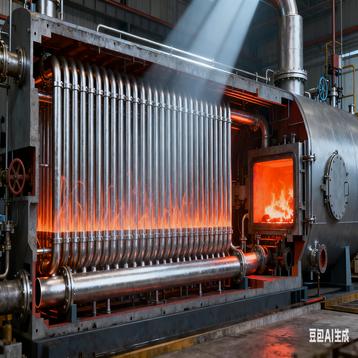
A Fire Tube Boiler, as the name suggests, is a type of boiler where hot flue gas from combustion flows inside the tubes, and water is heated outside the tubes. This type of boiler is compact, relatively simple to operate, and widely used in small industrial applications, commercial heating, and hot water supply.
In a fire tube boiler, the role of the seamless pipe as a Fire Tube is particularly crucial:
-
Heat Transfer Core: The fire tube is the main channel for heat transfer from the high-temperature flue gas to the boiler water. The uniform wall thickness and good conductivity of the seamless pipe ensure highly efficient heat transfer.
-
Structural Support: The fire tubes also act as supporting members for the internal structure of the boiler, bearing the pressure and temperature changes during operation. The overall strength of the seamless pipe plays a vital role here.
-
Safety Barrier: The fire tube is a critical barrier separating the high-temperature flue gas from the boiler water. The reliability of the seamless pipe directly relates to whether the boiler might experience safety incidents such as leakage or rupture.
Therefore, when selecting fire tubes for a fire tube boiler, using high-quality seamless pipes that comply with strict standards is the cornerstone for ensuring the boiler's long-term safe and stable operation.
3. How to Choose the Right Seamless Pipe for Your Boiler Project?
Selecting seamless pipes for boilers is not easy and requires comprehensive consideration of multiple factors:
-
Boiler Type and Operating Pressure/Temperature: Determine the required tube strength and heat resistance grade based on the boiler's design (e.g., fire tube boiler, water tube boiler) and its maximum operating pressure and temperature.
-
Material Selection: Common seamless boiler pipe materials include carbon steel (such as ASTM A179, A192, A210) and various alloy steels (such as ASTM A213 T11, T22, T91), depending on the temperature and pressure requirements.
-
Applicable Standards: Ensure the selected seamless pipe complies with relevant international or industry standards, such as ASME SA-179, SA-192, SA-210, SA-213, etc. These standards strictly regulate the material's chemical composition, mechanical properties, dimensional tolerances, and inspection methods.
-
Dimensions and Wall Thickness: Precisely determine the outer diameter and wall thickness of the seamless pipe according to the boiler design drawings to meet strength and heat transfer requirements.
-
Supplier Qualification and Certification: Choose experienced, reputable suppliers who can provide products that comply with various international certifications (such as ISO, API, PED, etc.) and furnish complete quality inspection reports.
Conclusion
Whether it's a professional manufacturer or a well-known boiler brand, the reliability of their products depends on high-quality boiler tubes. High-quality seamless pipes are key to ensuring the safe, efficient, and long-life operation of a boiler system.
Understanding and selecting the correct seamless boiler pipe is fundamental to ensuring the stable operation of your industrial heating system. If you have any questions about selecting seamless boiler pipes, you are welcome to consult with industry experts for professional advice and solutions.
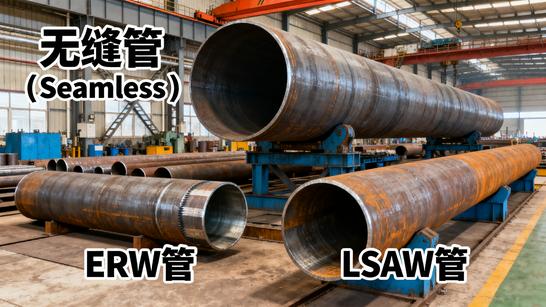
Seamless, ERW, LSAW: The Ultimate Comparison Guide to Carbon Steel Pipe Types