Understanding the Differences Between Seamless and Welded Pipes for Your Project

Introduction
When embarking on a project that requires pipes, whether it's for industrial, construction, or any other application, one of the most crucial decisions you'll face is choosing between seamless and welded pipes. These two types of pipes have distinct characteristics, each with its own set of advantages and disadvantages. A thorough understanding of these differences is vital as it directly impacts the performance, cost, and longevity of your project. This article aims to provide an in - depth exploration of the key disparities between seamless and welded pipes, enabling you to make an informed decision that aligns perfectly with your specific needs.
1.Manufacturing Process
1.1 Seamless Pipe Manufacturing
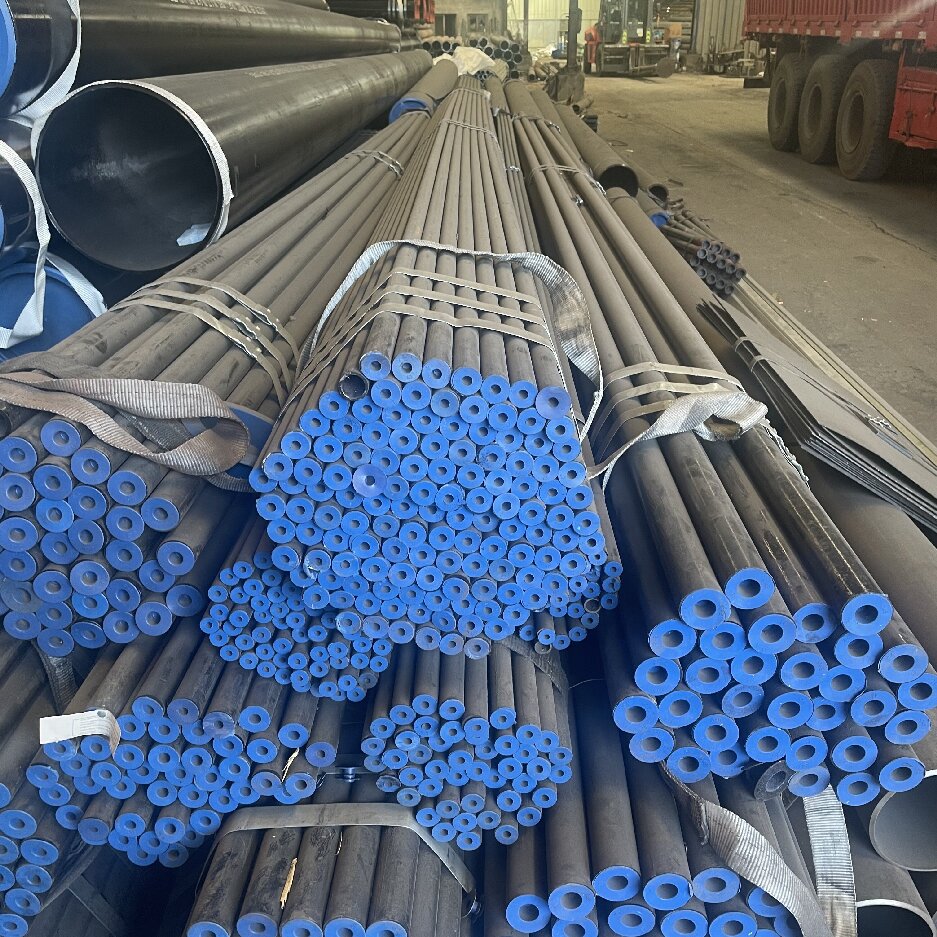
Seamless pipes are created through a process that ensures a continuous, uninterrupted structure without any welds. The journey begins with a solid billet, which is essentially a thick, cylindrical piece of metal. This billet is first heated to a high temperature, making it malleable and ready for the next step.
Once heated, the billet undergoes a piercing process. A specialized tool is used to create a hollow tube within the billet. This initial hollow tube is then further processed through rolling and shaping operations. During rolling, the tube is passed through a series of rollers that gradually reduce its diameter and increase its length while maintaining a uniform wall thickness. The shaping process then gives the pipe its final desired form, whether it's a straight pipe or a pipe with a specific bend or curvature.
The entire manufacturing process of seamless pipes results in a pipe with a smooth interior surface. There are no seams or welds that could potentially disrupt the flow of fluids or gases passing through the pipe. This smoothness is not only beneficial for fluid dynamics but also reduces the likelihood of corrosion initiation points within the pipe.
1.2 Welded Pipe Manufacturing
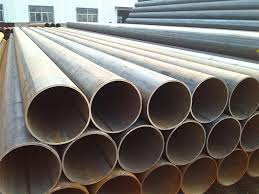
In contrast, welded pipes are constructed by joining together sections of steel plate or strip. The process starts with the selection of appropriate steel materials in the form of plates or strips. These materials are then cut into the required lengths and shapes according to the pipe's specifications.
Next, the edges of the cut sections are prepared for welding. This may involve beveling the edges to create a proper joint geometry that allows for a strong weld. Once the edges are ready, they are brought together and welded using various welding techniques such as arc welding, gas welding, or laser welding.
While welding is a well - established and effective method for joining metal components, it can introduce certain imperfections into the pipe. These imperfections can include lack of fusion, porosity, or cracks at the weld joint. Additionally, the heat - affected zone (HAZ) around the weld can have different mechanical properties compared to the base metal, potentially creating weak points in the pipe.
2.Strength and Durability
2.1 Seamless Pipe Strength
Seamless pipes are renowned for their superior strength and durability, primarily due to their uniform structure. Since there are no welds, the pipe has consistent mechanical properties throughout its entire length. This uniformity allows it to withstand high pressures and temperatures without deforming or breaking.
For example, in high - pressure applications such as in the oil and gas industry, where pipes are used to transport fluids under extreme pressures, seamless pipes are the preferred choice. Their ability to maintain structural integrity under such conditions ensures the safe and efficient operation of the entire system. Similarly, in high - temperature environments like in power plants, seamless pipes can handle the thermal stresses without experiencing significant degradation, thus extending their service life.
2.2 Welded Pipe Strength
Welded pipes, although still strong, may have some limitations in terms of strength compared to seamless pipes. The presence of welds creates potential weak points in the pipe. The weld joint is often the most vulnerable area, especially if there are any welding defects or if the HAZ has altered mechanical properties.
Under extreme conditions, such as very high pressures or sudden temperature changes, these weak points at the welds can be more susceptible to failure. For instance, if a welded pipe is subjected to a rapid increase in pressure, the weld joint may not be able to withstand the stress as effectively as a seamless pipe, leading to possible leaks or even pipe rupture. However, it's important to note that with proper welding techniques and quality control measures, welded pipes can still meet the strength requirements for many applications.
3.Corrosion Resistance
3.1 Seamless Pipe Corrosion Resistance
Seamless pipes offer excellent corrosion resistance because they lack welds, which are often the starting points for corrosion. Corrosion typically occurs when a metal reacts with its surrounding environment, such as moisture, chemicals, or salts. In a seamless pipe, the uniform structure means there are no crevices or discontinuities where corrosive substances can accumulate and initiate the corrosion process.
For example, in marine environments where pipes are exposed to saltwater, seamless pipes are less likely to develop pitting corrosion at welds. The smooth interior surface also reduces the buildup of deposits that can trap corrosive agents. This makes seamless pipes ideal for applications where corrosion resistance is a critical factor, such as in chemical processing plants or offshore oil and gas platforms.
3.2 Welded Pipe Corrosion Resistance
Welded pipes may require additional coatings or treatments to enhance their corrosion resistance, especially in harsh environments. The weld joint itself can be a site of concern as it may have a different microstructure compared to the base metal, making it more prone to corrosion. Additionally, if there are any welding defects, such as porosity or cracks, these areas can provide pathways for corrosive substances to penetrate the pipe.
To improve the corrosion resistance of welded pipes, various methods can be employed. One common approach is to apply protective coatings, such as epoxy coatings or zinc - based coatings, which act as a barrier between the pipe and the corrosive environment. Another method is to use corrosion - resistant alloys for the welding process or to perform post - weld heat treatment to modify the microstructure of the weld joint and improve its corrosion resistance.
4.Cost and Availability
4.1 Seamless Pipe Cost and Availability
Seamless pipes are generally more expensive than welded pipes. This higher cost is mainly due to the more complex manufacturing process involved in producing seamless pipes. The heating, piercing, rolling, and shaping operations require specialized equipment and skilled labor, which add to the production costs.
In terms of availability, seamless pipes are available in a wide range of sizes and grades, but they may not be as readily available as welded pipes in some cases. The production of seamless pipes often involves longer lead times, especially for custom - made or large - diameter pipes. However, for high - pressure or corrosive applications where performance is of utmost importance, the higher cost and potential longer lead times of seamless pipes are often justified.
4.2 Welded Pipe Cost and Availability
Welded pipes are typically more cost - effective than seamless pipes. Their simpler manufacturing process, which involves joining pre - cut sections of steel, requires less specialized equipment and labor, resulting in lower production costs. This cost advantage makes welded pipes a popular choice for many applications where high - performance is not the primary requirement.
Welded pipes are also more widely available in various sizes and grades. They can be produced in large quantities relatively quickly, making them readily accessible in the market. This availability makes it easier for project managers to source the required pipes without having to wait for long lead times, which can be crucial for time - sensitive projects.
Conclusion
Choosing between seamless and welded pipes is a decision that should be based on your specific project requirements. If your project demands a pipe that can withstand high pressure, extreme temperatures, or corrosive substances, a seamless pipe, such as our Cold - Drawn Precision Seamless Tube with High Dimensional Accuracy, is likely the best choice. Its uniform structure, superior strength, and excellent corrosion resistance make it well - suited for these challenging applications, despite its higher cost and potentially longer lead times.
On the other hand, for less demanding applications where cost is a significant factor and high - performance is not critical, a welded pipe can offer a cost - effective solution. With proper selection of materials, welding techniques, and corrosion - protection measures, welded pipes can still meet the requirements of many projects and provide reliable service.
To ensure you make the right choice, it's advisable to consult with pipe suppliers or engineers who can provide expert advice based on your specific project parameters. Explore our range of pipes, both seamless and welded, to find the perfect fit for your needs and ensure the success of your project.[Back to Comprehensive Guide to Stainless Steel and Metal Pipes: Dimensions, Types, and Selection Criteria]
Unveiling the Core Technologies Behind Threaded Steel Pipes: From Composition to Manufacturing Excellence
The Importance of Choosing the Right Metal Seamless Pipe for High-Pressure Applications
Related Article