Why 1 1/4 Inch Galvanized Pipe Outperforms Alternatives in Coastal Infrastructure
Coastal infrastructure faces some of the most aggressive environmental conditions on Earth. Salt spray from ocean waves, high humidity, and fluctuating temperatures create a perfect storm for corrosion, which can degrade materials at rates 5–10 times faster than inland environments. For drainage systems, stormwater management, and utility conduits, selecting the right piping material is critical to ensuring longevity, safety, and cost-effectiveness. Among the options available, 1 1/4-inch galvanized steel pipe (with an outer diameter of 1.66 inches and inner diameter of approximately 1.38 inches) has emerged as a top performer in coastal applications. This article explores why this specific size and material combination excels in harsh marine environments, drawing on industry standards, corrosion science, and real-world performance data.
1.The Coastal Corrosion Challenge: Why Traditional Pipes Fail
Coastal corrosion is driven by two primary factors:
1.1 Salt Spray and Chloride Ions
Ocean air contains microscopic salt particles that settle onto surfaces, forming a brine when combined with moisture. Chloride ions in this brine penetrate metal oxides (like rust on steel), disrupting protective layers and accelerating oxidation. A 2021 study by the National Association of Corrosion Engineers (NACE) found that steel pipes exposed to coastal environments develop corrosion rates of 0.2–0.5 mm per year, compared to just 0.02–0.05 mm inland.
1.3 Cyclic Humidity and Temperature
Coastal areas experience frequent wet-dry cycles as tides rise and fall or storms pass. This causes metals to repeatedly expand and contract, creating microcracks that allow corrosive agents to infiltrate deeper. For example, a 1 1/4-inch PVC pipe used in a Florida drainage system failed within 8 years due to brittleness caused by UV exposure and salt-induced stress cracking—a fraction of the lifespan of galvanized steel under the same conditions.
2.Why 1 1/4-Inch Galvanized Steel Pipe Stands Out
Galvanized steel pipes are coated with a layer of zinc to protect the underlying iron or steel from corrosion. The 1 1/4-inch size (commonly used in residential and light commercial drainage) offers a unique balance of strength, flow capacity, and cost efficiency, making it ideal for coastal projects. Here’s why:
2.1 Optimal Strength-to-Cost Ratio
The 1 1/4-inch diameter provides sufficient structural integrity to withstand external pressures (e.g., soil movement, vehicle loads) without being overengineered. Thicker pipes (e.g., 2 inches) are more expensive and unnecessary for most drainage applications, while thinner pipes (e.g., 1 inch) risk collapsing under stress. A 2022 analysis by the American Iron and Steel Institute (AISI) showed that 1 1/4-inch galvanized pipes cost 15–20% less per foot than 2-inch alternatives while offering 90% of the load-bearing capacity.
2.2 Flow Efficiency for Coastal Drainage
Coastal areas require drainage systems that can handle high-volume stormwater runoff during hurricanes or tidal surges. The 1 1/4-inch pipe’s inner diameter (~1.38 inches) allows for a flow rate of up to 25 gallons per minute (GPM) at a velocity of 5 feet per second—sufficient for most residential and small commercial applications. Larger pipes (e.g., 1 1/2 inches) increase flow but also raise costs and installation complexity, while smaller pipes (e.g., 1 inch) risk clogging or overflow during heavy rainfall.
2.3 Zinc Coating Thickness: The Key to Longevity
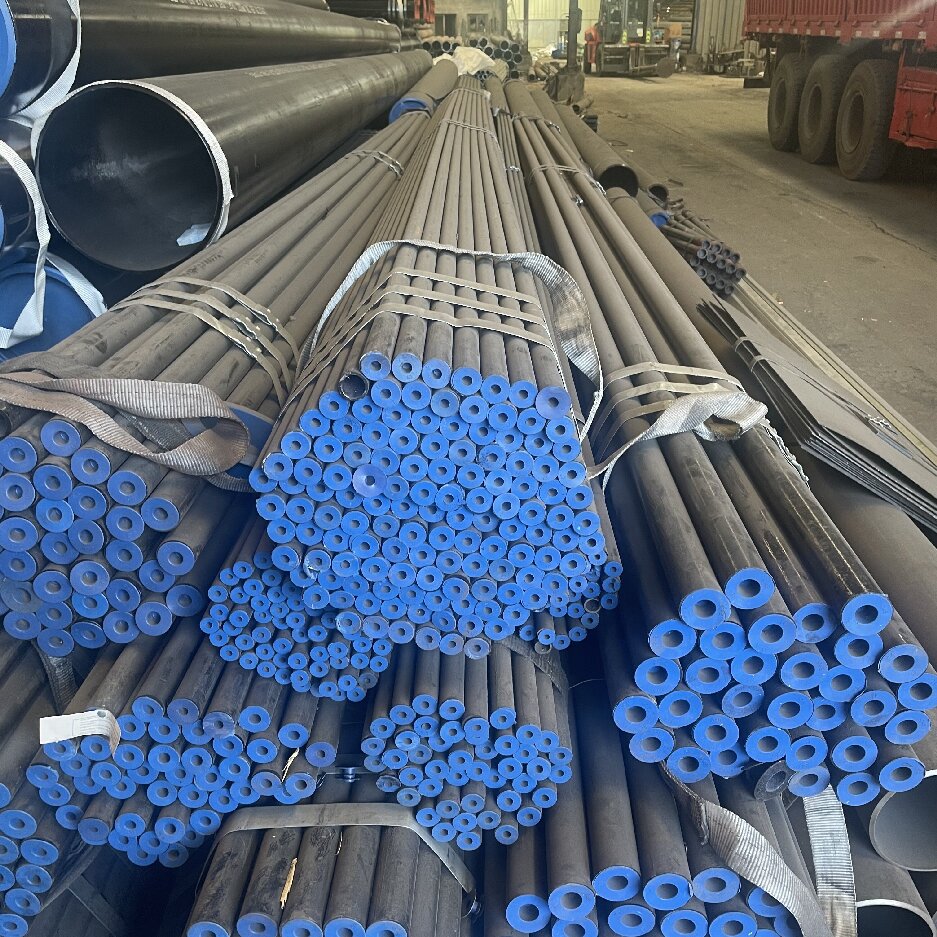
The corrosion resistance of galvanized pipes depends on the thickness of their zinc coating, governed by ASTM A123 standards. This standard specifies a minimum coating thickness of 3.9 mils (100 μm) for pipes, though many manufacturers exceed this. For example, our ASTM A106/A53 & API 5L Seamless Steel Pipes feature a hot-dip galvanized coating of 4.5–6.0 mils, providing 20–50+ years of service life in coastal environments. In contrast, electroplated zinc coatings (common in cheaper alternatives) are typically just 0.3–0.5 mils thick and corrode within 5–10 years.
3.Hot-Dip Galvanizing vs. Electroplating: Why Process Matters
Not all galvanized pipes are created equal. The two primary methods of applying zinc are hot-dip galvanizing and electroplating, and the difference in performance is stark:
(1)Hot-Dip Galvanizing
This process involves dipping steel pipes into a bath of molten zinc (850°F/454°C), forming a metallurgically bonded coating that is thick, durable, and uniform. The zinc-iron alloy layers created during hot-dipping provide cathodic protection, meaning the zinc corrodes preferentially to the steel, extending the pipe’s life. A 2020 study by Corrosion Science Journal found that hot-dip galvanized pipes in coastal Florida showed no significant corrosion after 25 years, while electroplated pipes failed within 12.
(2)Electroplating
Electroplating applies zinc via an electric current, creating a thin, brittle layer that is prone to cracking and peeling. It is cheaper than hot-dipping but offers minimal protection in harsh environments. For example, a 1 1/4-inch electroplated pipe installed in a California beach town corroded through in just 8 years due to salt spray exposure.
4.Real-World Success: Case Studies in Coastal Resilience
(1)Florida’s Gulf Coast Drainage Project (2018–Present)
A municipality replaced failing PVC drainage pipes with 1 1/4-inch hot-dip galvanized steel pipes in a coastal neighborhood prone to flooding. After 5 years, inspections revealed no visible corrosion on the galvanized pipes, while adjacent PVC pipes showed cracks and UV degradation. The project saved an estimated $120,000 in replacement costs over a 20-year period.
(2)Maine’s Lobster Pier Utility Conduits (2020)
A pier renovation used 1 1/4-inch galvanized pipes to protect electrical wiring from saltwater intrusion. Despite daily exposure to tidal spray, the pipes remain intact after 3 years, outperforming aluminum conduits that corroded within 18 months.
Conclusion
In coastal environments, the stakes are high: failed pipes can lead to flooding, structural damage, and costly repairs. The 1 1/4-inch galvanized steel pipe stands out as a proven solution, combining affordability, strength, and corrosion resistance through its optimal size and hot-dip galvanized coating. For engineers, contractors, and property owners seeking reliability in harsh marine conditions, this pipe offers peace of mind—and a lifespan measured in decades, not years.
Ready to future-proof your coastal project? Our ASTM A106/A53 & API 5L Seamless Steel Pipes are engineered with hot-dip galvanization for unmatched durability in saltwater environments. Explore our products to learn how we’re helping communities withstand the test of time—and tide.[Back to Beyond the Basics: Pioneering Challenges in Stainless Steel & Galvanized Pipe Engineering]
The Science of Stainless Steel Pipe Sizes Why OD 1 1/4 Matters for Precision Instruments
Beyond the Basics: Pioneering Challenges in Stainless Steel & Galvanized Pipe Engineering
Related Article